As of Jan 1, I’ve been using a brilliant journalling technique that a writing instructor shared:
Spend five minutes each night before bed writing about your manuscript.
(Not working on it, mind you. That comes the next day.)
- State the problem–e.g., Why isn’t my short story, “Smooch,” working for me?
- Turn the problem over to your ‘secret helper,’ your subconscious mind
- Go to sleep
- In the morning, wake up, and discover that you have answers, maybe unexpected insights, and a whole lot of excitement for the project
What I discovered about that short story, “Smooch”:
I don’t care about Estelle, my main character. She’s not sympathetic, not layered, not real enough to engage my sympathies or even my interest.
I’m using her as a symbol, but even symbols need to feel real. Estelle does not feel real.
I’ve lost track of why I wanted to write this story. I remember when I started crafting it–while out mowing the lawn, intending to write a birthday poem for a friend, this story came to me instead.
But why? I need to remember why, if I want to write a story that matters to me and to others.
Finally, I decided that “Smooch” and Estelle will sit and rest, as I turn back to my novel manuscript.
My five-minute journal is providing juicy insights and solutions there, too.
For example:
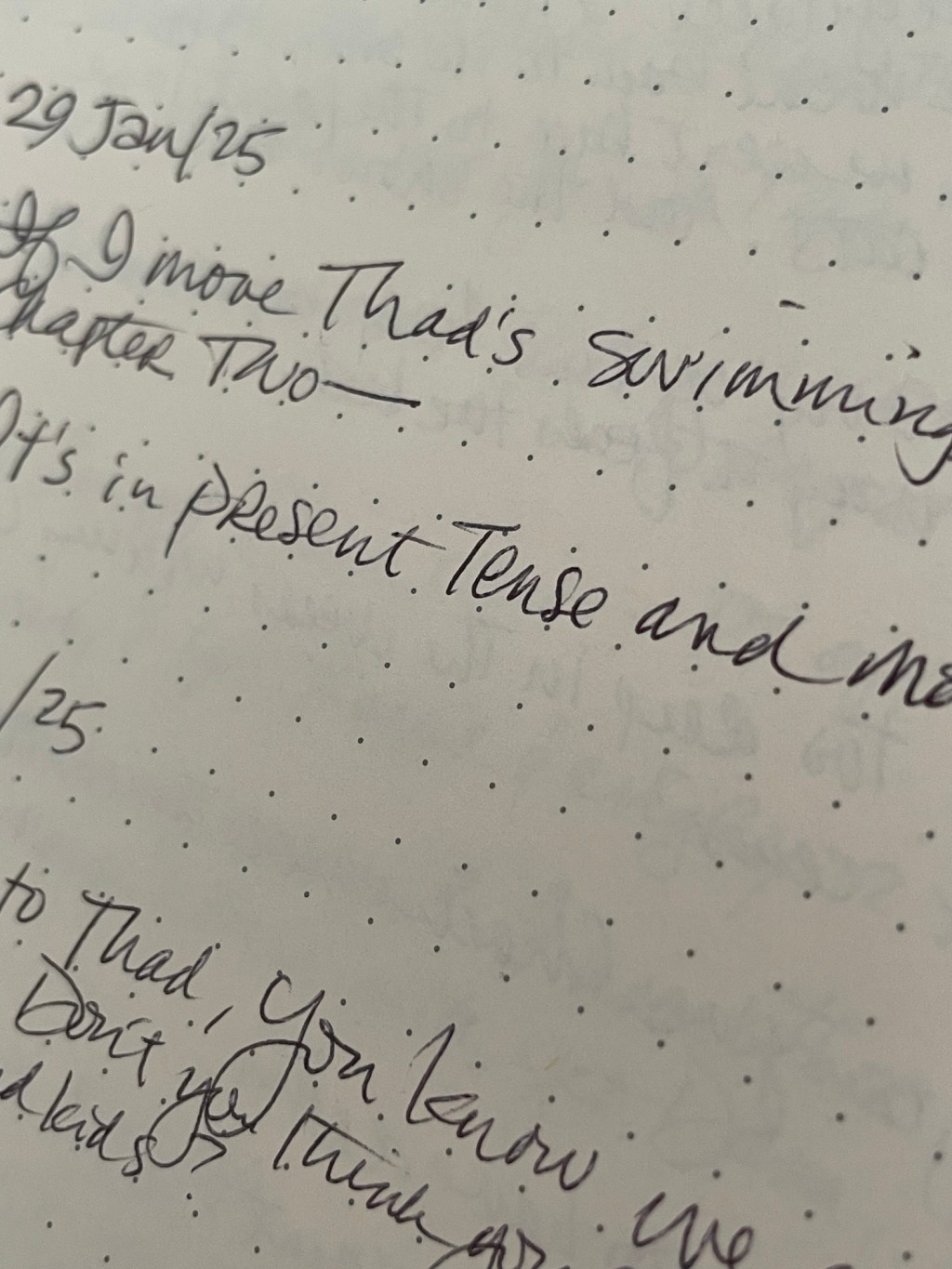
Convert Thad’s swimming rock scene from a flashback a third of the way through the story, to a chronological, present-tense appearance as Chapter Two. This scene is crucial to Thad’s development as a character. The slow-reveal I was going for is actually a waste of the scene, which needs to be experienced as it happens for the reader feel its impact as powerfully as Thad deserves.
– my five-minute journal
This five-minute journal technique is useful in other spheres of life too. Whether you’re solving the problem of a story or of a personal life question, I highly recommend starting tonight with your five minutes, and letting your subconscious surprise you with its wisdom.
Let me know how it goes!
~~


 Writing Spaces
I’d love to hear what you think!