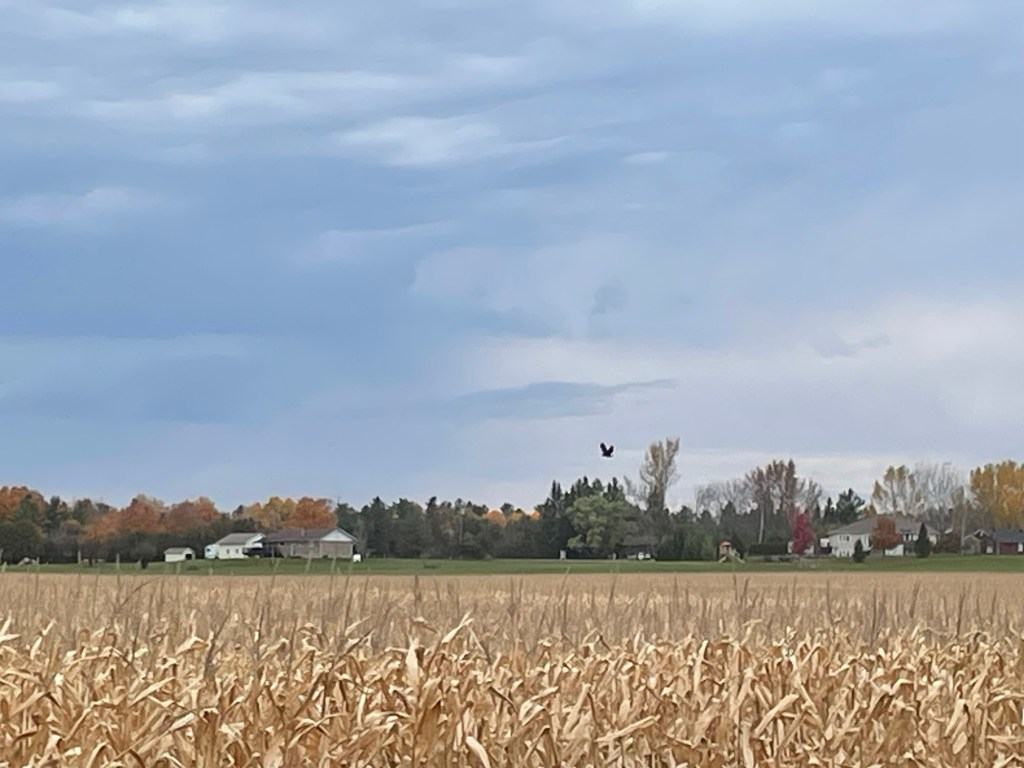
When I’m writing well, it feels like flying. Heady, steady, free. No need to steer or fear. Perfect harmony: page, words, brain.
I’m not flying now. I’m standing on a rock, holding the pages of a story I’m shaping, and gathering myself to leap with them into flight. I’m crouching, readying, springing up and…no. My feet are crafted from stone, from the rock itself. The jump is a flat defeat.
Reading a well-written book is like flying. Not as satisfying as when my own words are in harmony with my brain, but close. Good books are lessons in good writing.
Because my novel-in-progress involves people who ride horses, I’m caught up in books about people who ride horses. Because my novel involves same-sex attraction, I’m caught up in books about queer folks. Because one of my characters nicknames another one “cowboy,” I’m caught up in novels about cowboys. Because I want to write better, I’m reading.
Currently, I’m reading The Virginian, A Horseman of the Plains, by Owen Wister.* (The link will take you to the Project Gutenberg free publication of the book.) Set in Wyoming Territory in 1974 to 1890, and published in 1902, The Virginian is considered the first real Western novel, the one that gave America its solid start in the love affair with cowboys.
Note:
With everything we read, we get not just the story but the mores of the time. As a kid I devoured Agatha Christie, but I find her books hard to read now for their racism and sexism. Same with The Virginian: I don’t love its embedded racism. The misogyny I can pardon a bit, as it is self-conscious and comes with social commentary, letting us know the author knows that women deserve more respect than they got in the last quarter of the 19th century. The racism, from what I can see, is completely unconscious, and is an aspect of this book I’ll warn you about. Also, in my opinion the drive West, the drive to open new lands on the American continent, was based on a problematic world-view, which still largely dictates our social choices today. That’s a conversation for another time, but is an underlying complaint for me with every cowboy story.
What I do love is the view The Virginian gives, from an author who was in that place at that time, of a landscape that was gone even a dozen years later when The Virginian was published. Witnessing the land before humans ran it over feeds my heart and soul. What I love is the language, clever and observant and tender and funny enough that I snort out loud.
What I love is how Wister has created a nameless narrator who serves numerous purposes. One of them is to keep the reader at a distance from the main character, the Virginian, for that young man keeps himself private and at a distance from everyone. A first-person entry into the Virginian’s head would ruin the slow reveal and the deep self-possession of the man. We would not have the same character if we saw the Virginian from within his own head.
What I love also is the goodness of the protagonist: the Virginian has an inherent moral code that values honesty, respect, and kindness.
But this is not primarily a review of The Virginian. It’s a piece about the struggle to write like flying. To write a book that carries the reader steadily through the air. Despite how smoothly The Virginian soars, Owen Wister didn’t take just one crack and come out with these characters, these finely woven interactions. Did he have beta readers, and developmental editors, and hours and months and years of working to make things better? I suspect his process was closer to flying than mine is, ever. I suspect he was, quite simply, an excellent writer. But he had at least one manuscript reader, whose comments resulted in changes to the text: Theodore Roosevelt.
Some of these pages you have seen, some you have praised, one stands new-written because you blamed it; and all, my dear critic, beg leave to remind you of their author’s changeless admiration.
Owen Wister to Theodore Roosevelt in The Virginian
I’m amazingly fortunate to have wonderful beta readers and developmental editors, yet despite their input and my own past experiences of flight, my feet are right now rock-bound. It’s frustrating to see potential for a story and not know how to take it to the skies. Patience and persistence, and learning new approaches, are all I can do. Time, time, time, no matter how much it takes, is what I must settle into.
Owen Wister died in 1938 and I can’t chat with him about his process and his choices in writing. And his is not the only, or even the best, book for me to study in my quest to learn from better writers. Madeline Miller’s The Song of Achilles,** Jennifer Tseng’s Mayumi and the Sea of Happiness, Hanya Yanagihara’s A Little Life, the novel Life After Life and many others by Kate Atkinson, as well as the entire Falco series by Lindsey Davis, are a short list of some of my major influences. And so many of my friends are writers, and their examples of fine work, and our conversations about writing, keep me pointed skyward.
So, I read, for guidance. I shuffle over the earth in my rock-feet, and I think. I return to my own pages and train my eyes to see the words on them in a new way. It’s a long process that sometimes requires more faith than I have in my own abilities. But eventually, finally, each period of rock-bound frustration shatters into insight, and the story and I lift together from the ground, carrying each other, heady, steady, free.
That’s about to happen, right? I’m about to fly.
~~~
*The Virginian is one of the books used as an example by Chris Packard in Queer Cowboys: And Other Erotic Male Friendships in Nineteenth-Century American Literature to prove his thesis (at the link you can scroll down to my review of that book on Goodreads). Okay, I see the possibility of same-sex erotic subtext in The Virginian. But barely. For an overlapping, yet broader, context on same-sex interactions in this time period, I recommend D. Michael Quinn’s Same-Sex Dynamics Among Nineteenth-Century Americans: A Mormon Example (again, my Goodreads review is at the link.)
**Reportedly, Madeline Miller spent ten years writing The Song of Achilles, which I consider a superb book. I often comfort myself with her example when I wonder if I’m taking “too long” with my own manuscript. It’s been only four 1/2 years since I started this from nothing and with no clue how to put together a novel or to draw credible characters! And while other writers have the skill to put their own works out and have them published after a much shorter time, I can only be myself, and tell myself that whatever happens with this book, I’ve learned enough that the next one will come just a wee bit smoother. Maybe.
~~~


 Writing Spaces
I’d love to hear what you think!